

An older water softener does not automatically need replacement when spots return or treated water feels different. The decision should follow a check of incoming and treated water, the regeneration process, the equipment’s condition, and the household’s current demand. A repair can be sensible when a specific fault is found and the rest of the system remains suitable.
Replacement becomes worth comparing when damage affects major components, needed parts are unavailable, faults keep returning, or the system no longer meets the home’s requirements. Ask for the findings and a written repair scope before deciding that age alone makes a new system necessary.
Measure Performance Before Pricing a Replacement
A change in spotting or soap performance is useful evidence, but it does not identify the failed component. Water conditions, household use, bypass position, settings, and regeneration problems can affect results. The first question is whether the system is reducing hardness under the conditions in which the home actually uses it.
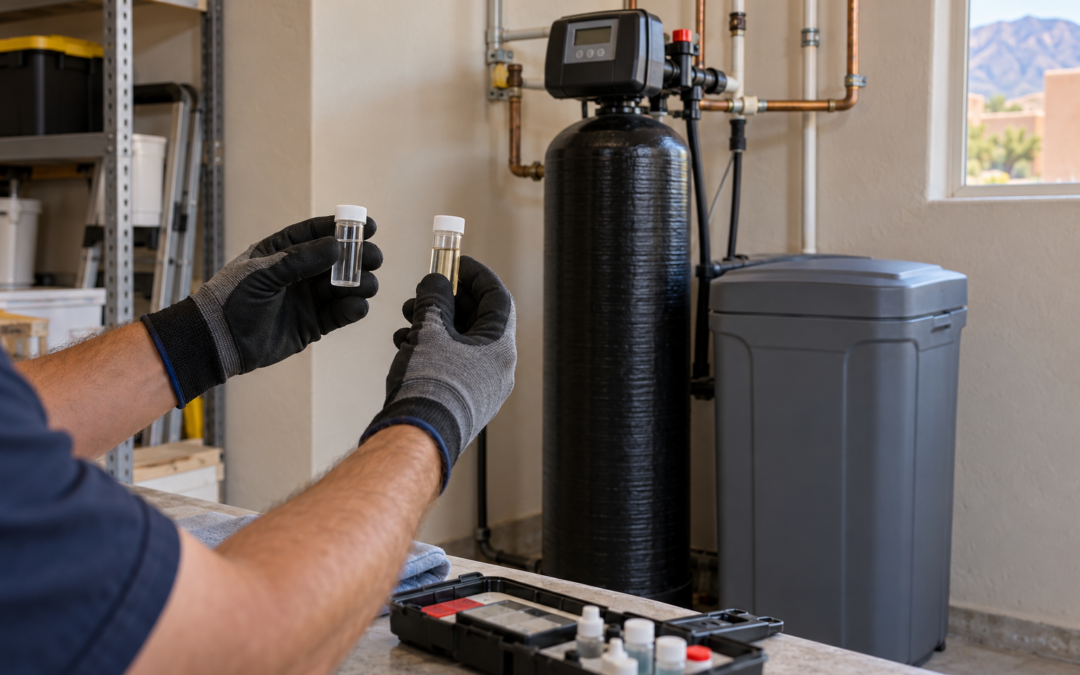
A technician can compare the incoming water with samples taken after treatment and review when they were collected relative to regeneration and water use. A single sample without that context may miss a problem that appears only late in a service cycle or during heavier demand.
Ask what was measured and what the results establish. The assessment should explain whether the problem is confirmed softening performance, another water-quality concern, or a plumbing issue outside the equipment. Replacing a softener will not resolve every possible cause of a household complaint.
Separate a Correctable Fault From a Worn-Out System
A useful recommendation names the problem and the proposed correction instead of simply labeling the equipment old. Common assessment areas include:
- Control settings and whether regeneration is occurring as intended
- Brine draw and the components involved in regeneration
- Valves, seals, and connections that may be leaking or malfunctioning
- Resin condition and the performance measured after treatment
- Metering or controls that no longer respond correctly to use
- Whether the installed system remains suitable for household demand
Professional water softener service can distinguish a focused maintenance or repair need from a broader equipment problem. Do not assume that every item in this list applies to your system; the technician should identify the actual fault before quoting work.
When Repair Deserves a Serious Comparison
Repair may be reasonable when a specific replaceable component has failed, compatible parts are available, and the main equipment remains sound. The proposal should identify the part, labor, any needed setup, and the checks used to confirm that the system performs properly afterward.
Ask whether the repair addresses the whole complaint or only the visible symptom. For example, correcting a leak and restoring hardness reduction are separate outcomes. If both are concerns, the scope should explain how both will be assessed.
Consider the service history as well as the current bill. One isolated repair differs from repeated repairs with recurring performance loss. Neither pattern proves a replacement is required, but the history helps you compare the likelihood of additional work without relying on an invented life-expectancy number.
When Replacement Becomes Worth Comparing
A replacement discussion is appropriate when the evaluation finds serious equipment damage, several deteriorated components, or a condition that cannot be corrected with a dependable available repair. Ask which findings support that conclusion and whether any practical repair alternative remains.
Parts availability also matters. A relatively narrow fault can become difficult to repair when the correct component is no longer supported. Request the exact limitation rather than accepting a broad statement that an older unit cannot be serviced.
Replacement is a choice about the complete installed system. Compare the proposed equipment, installation changes, startup, verification, maintenance, and support with the repair alternative. A new tank on its own does not describe the whole project.
Check Whether Household Demand Has Changed
An existing system may have been selected for a different household or usage pattern. More occupants, additional bathrooms, frequent guests, or changes in water use can affect the assessment. Equipment that functions as designed may still need its suitability reviewed.
Ask how measured incoming hardness, typical use, and peak flow were considered. Capacity and flow performance describe different aspects of suitability. A headline capacity number should not replace a recommendation based on the property and the actual water conditions.
If a replacement is recommended, the comparison should explain what it changes for your home. Avoid assuming that a larger unit is automatically better or that the most expensive option is needed. The equipment should fit the measured problem and the available installation space.
Compare the Installed Scope, Not Just the Equipment
A repair quote and a replacement quote may include very different amounts of work. Confirm whether the new-system proposal includes removing the old equipment, adapting connections, setting up the controls, checking drainage and service access, and verifying operation.
Existing treatment equipment can affect the plan. Ask whether any prefilter, drinking-water system, or other component stays, changes, or needs separate service. Those decisions should follow the existing installation and water assessment rather than a generic package.
MicroPure offers water softener systems as well as service. When comparing an option, request the proposed model and written installed scope so you can distinguish equipment features from work that may be excluded or handled separately.
Gather Useful History Without Dismantling Equipment
These observations help an assessment without opening pressurized or electrical components:
- The model and serial number, if visible from a safe position
- When the change in water performance began
- Previous service visits and replaced components
- Any visible leaking or new noises
- Changes in occupants, bathrooms, or water use
- Any control message that is visible without removing a cover
- What has changed in regeneration behavior or routine salt use
Keep the existing settings and installation intact for diagnosis unless a qualified technician gives specific instructions. Do not disconnect plumbing, remove control covers, take apart the valve, alter drain connections, or add cleaning chemicals to experiment with the cause.
If equipment is actively leaking, keep people away from affected electrical components and contact a professional. Use a clearly identified familiar shutoff only if it is safe to do so. Do not continue testing a leaking system to gather more information.
Questions to Ask About Both Options
A fair comparison explains the repair and replacement outcomes in the same practical terms. Ask:
- Which measurements and findings explain the current problem?
- What exact components or work are included in the repair?
- Are compatible service parts available for this model?
- Does the repair restore the needed performance or address only one symptom?
- What equipment and installation work are included in replacement?
- How was suitability for the household and measured water established?
- What maintenance and supplies will each option require?
- What parts, labor, or support terms apply, and what is excluded?
- How will correct performance be checked after the work?
- What unresolved condition could change either scope?
Request the applicable terms in writing. Do not assume a particular warranty, service interval, ongoing savings, or delivery date unless it is included in the exact proposal. That makes the comparison useful without turning it into a promise about your home.
Keep Water-Quality Goals Separate
A softener recommendation should answer the hardness problem identified in the assessment. If your concern is taste, odor, sediment, or another water characteristic, explain that separately so the appropriate testing and treatment can be discussed.
A general desire for better water should not automatically become a full equipment replacement. Clarify what result you want, what the current system does, and what each proposed change is intended to achieve. Different treatment functions may call for different equipment or service.
Arrange an Assessment Before Buying New Equipment
For an Albuquerque or Rio Rancho home, a measured assessment is a useful first step when an existing softener stops meeting expectations. Bring the service history and observations, ask for the confirmed cause, and compare the complete repair and replacement scopes before committing.
Call MicroPure Water Systems at (505) 792-1226 or request a water-system assessment. The goal is to understand whether a focused repair can restore the result you need or whether replacement offers a more suitable complete solution.